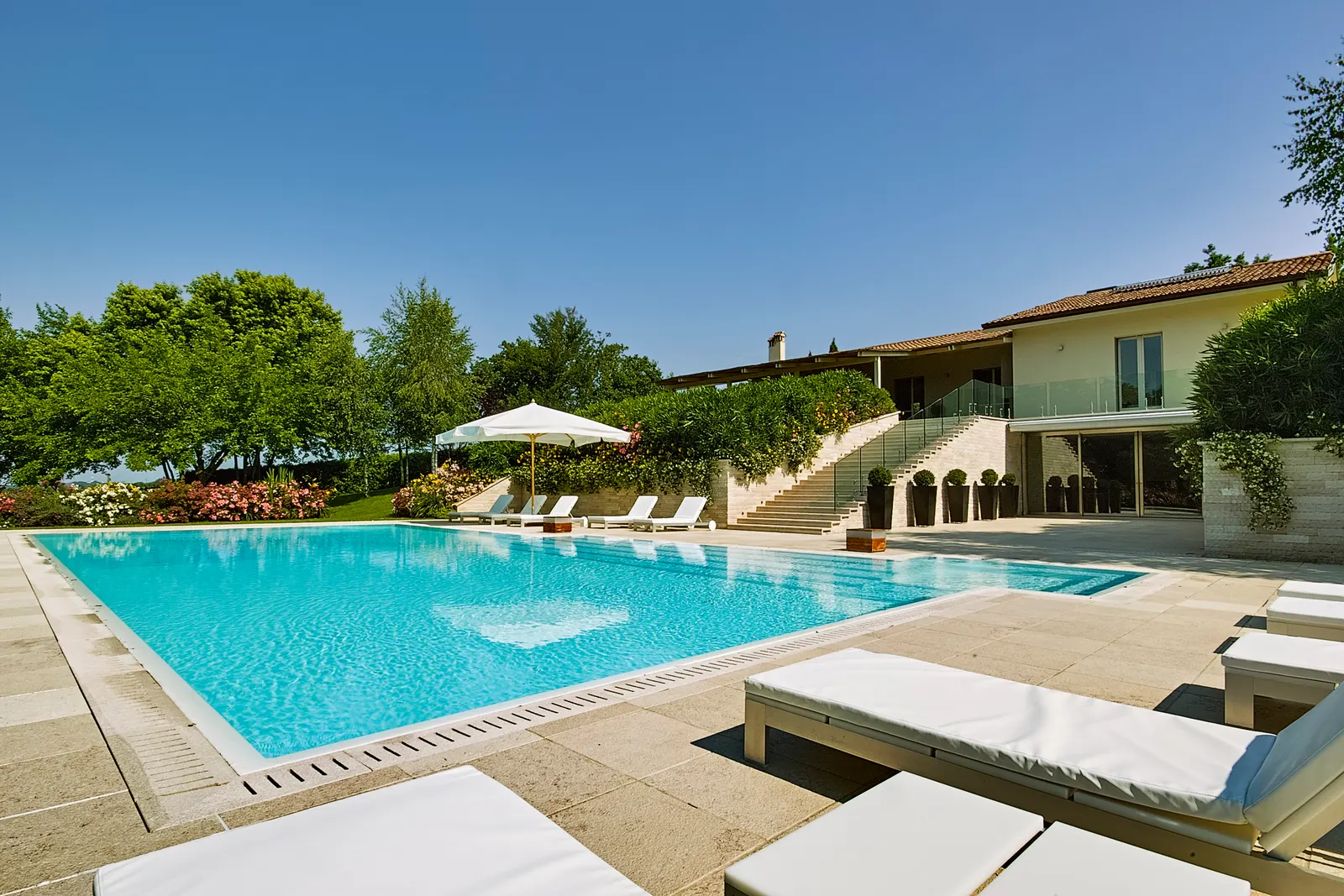
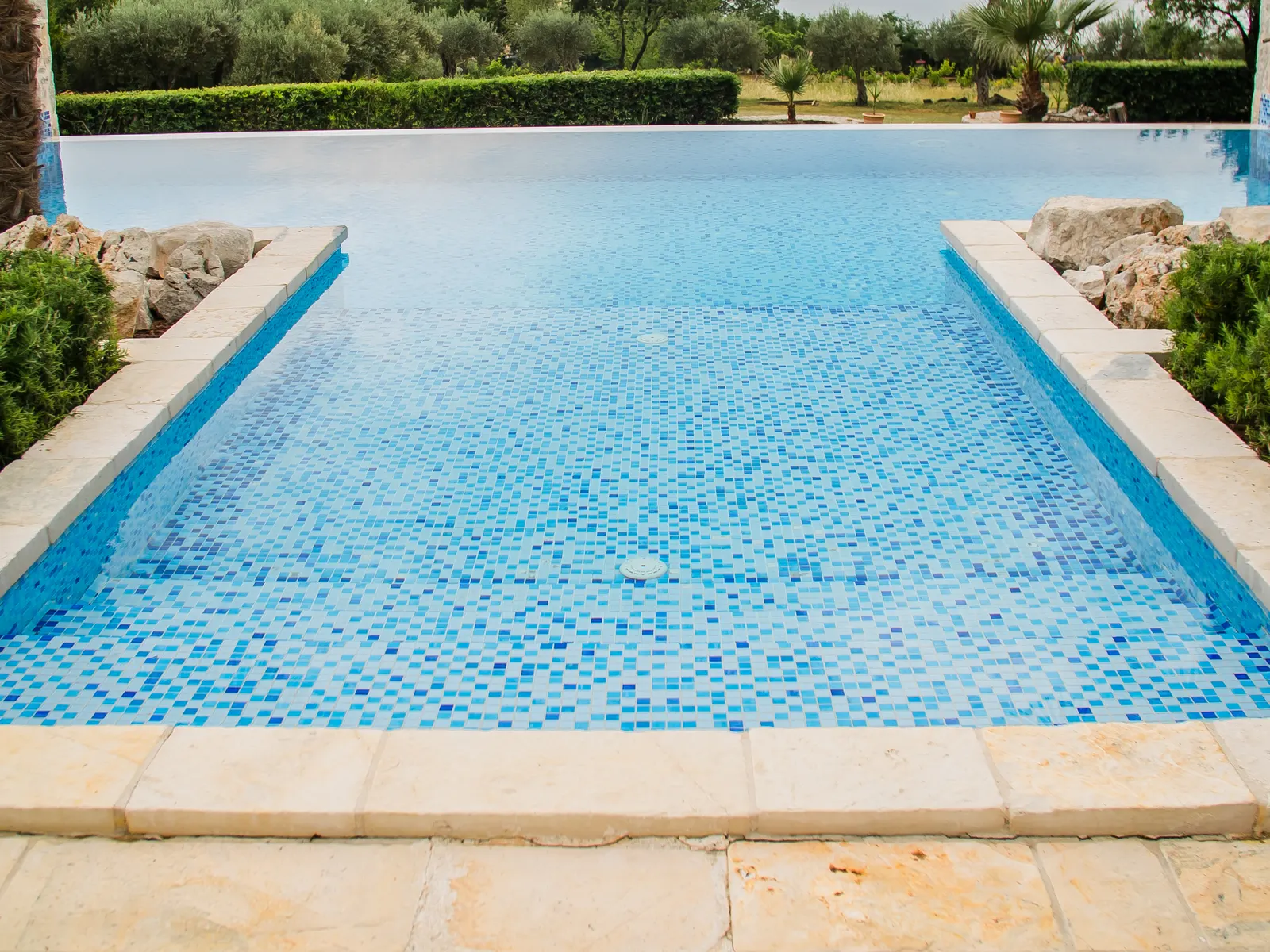
The stone Roman baths were built from turns out to be engineered for the Florida pool deck: cool, grippy, and unbothered by a century of sun.
Every material has a habitat where it simply belongs. Travertine — the pitted, creamy limestone the Romans built baths from two thousand years ago — belongs around a Florida pool. We install a lot of surfaces; nothing else gets the barefoot test reaction travertine does on a ninety-five degree day.
Why it stays cool when everything else burns
Travertine is naturally porous — thousands of tiny voids run through the stone. Those air pockets slow heat transfer, so the surface sheds warmth instead of banking it the way dense concrete does. Lighter ivory and cream tones reflect sun on top of that. The same porosity gives it wet grip: splash water wicks into the surface instead of filming across it, which is why a honed-and-tumbled travertine deck feels sure underfoot seconds after a cannonball.
What it costs, honestly
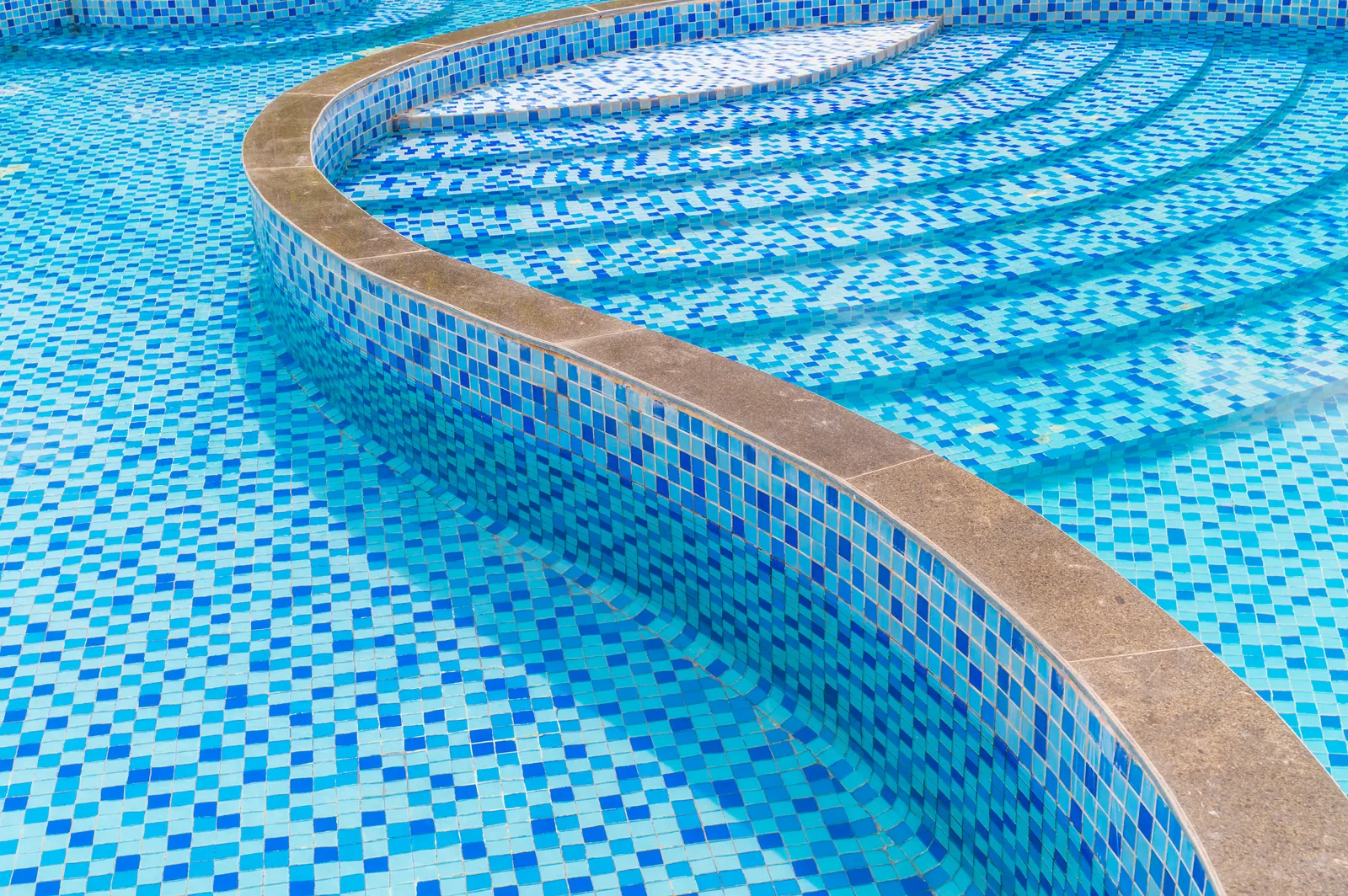
Travertine sits at the top of the paver menu — typically several dollars per square foot above quality concrete pavers, installed. You are paying for quarried natural stone and the handling it demands. What you get back: the coolest deck money buys, a look that photographs like a resort, and the strongest resale story of any deck surface in the Florida market. On remodels where budget is tight, a popular compromise is travertine coping and waterline treatment with a premium concrete paver field — the hand and eye touch travertine where it counts.
Patterns, tones, and the French pattern default
Most Florida travertine decks run the French (Versailles) pattern — four sizes interlocking in a rhythm that hides cuts and reads timeless. Ivory and cream tones maximize the cool-touch effect; walnut and noce bring warmth and hide leaf stains under oaks; silver travertine suits modern architecture. We bring full-size samples to the estimate because travertine changes character wet, and every pool deck spends half its life wet.
Care in the real world
Seal travertine with a penetrating sealer that soaks in and disappears — never a glossy topcoat, which defeats the grip and the matte character. Re-seal every few years, treat rust and leaf stains promptly, and re-sand joints as part of the normal cycle. That is the whole regimen. The stone itself has already survived antiquity; your pool deck will not challenge it.
Talk to the crew
Free on-site estimate, anywhere in Orange, Seminole, Osceola, Lake, Polk Counties
FL Certified Pool/Spa Contractor · CPC1458737