Two inches of rain in an hour is a Tuesday here. Permeable pavers turn your driveway from a runoff chute into a drain — and Florida is their perfect habitat.
Every Central Florida homeowner knows the summer ritual: the 3 p.m. sky goes black, an inch of rain lands in forty minutes, and your driveway becomes a river delivering all of it to the garage door, the flowerbed, or the neighbor’s yard. Standard pavement — concrete or classic pavers — sheds water. Permeable pavers do something better: they swallow it.
How a permeable system works
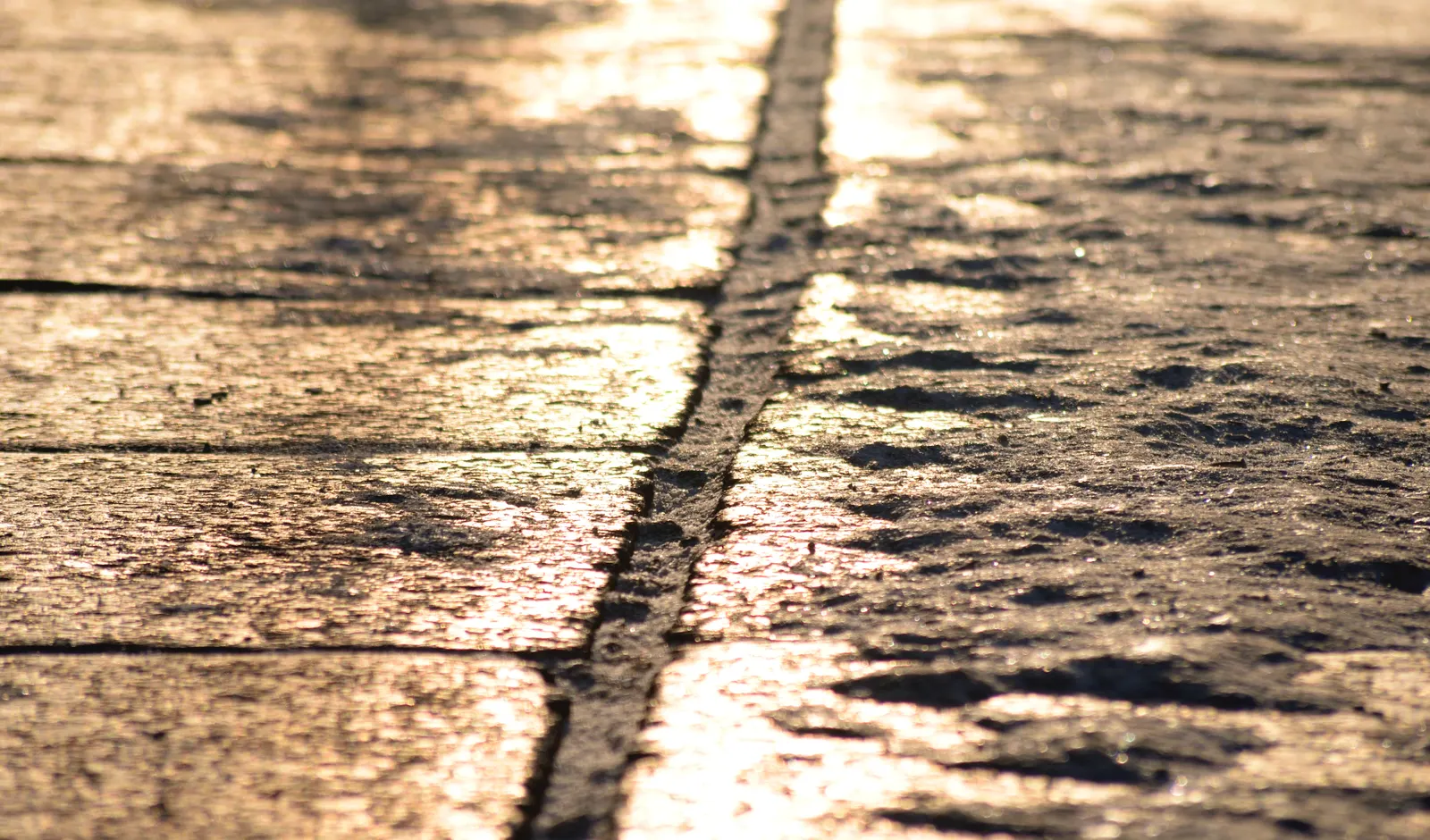
From above, permeable pavers look like a normal (usually handsome, large-jointed) paver surface. The engineering is below. Joints are widened and filled with small clean stone instead of sand, and the base is open-graded crushed rock — full of voids — sitting on the soil. Rain passes through the joints, into the stone reservoir, and percolates into the ground instead of racing across the surface. A properly built system can absorb Florida’s heaviest bursts without a puddle forming.
Why Florida is the perfect habitat
Permeable systems live or die by how fast the native soil under them drains — and Central Florida’s sandy soils are among the fastest-draining in the country. The systems that need elaborate underdrains up north often work here as simple, elegant infiltration beds. Add our rainfall intensity, and the case writes itself: nowhere needs to absorb sudden water more, and few places absorb it better.
When permeable is the right call
- Driveways and aprons that flood the garage or sheet water into the street.
- Side yards and patios that stay swampy for days after storms.
- Lots bumping against impervious-coverage limits — permeable surfaces often count differently with local jurisdictions.
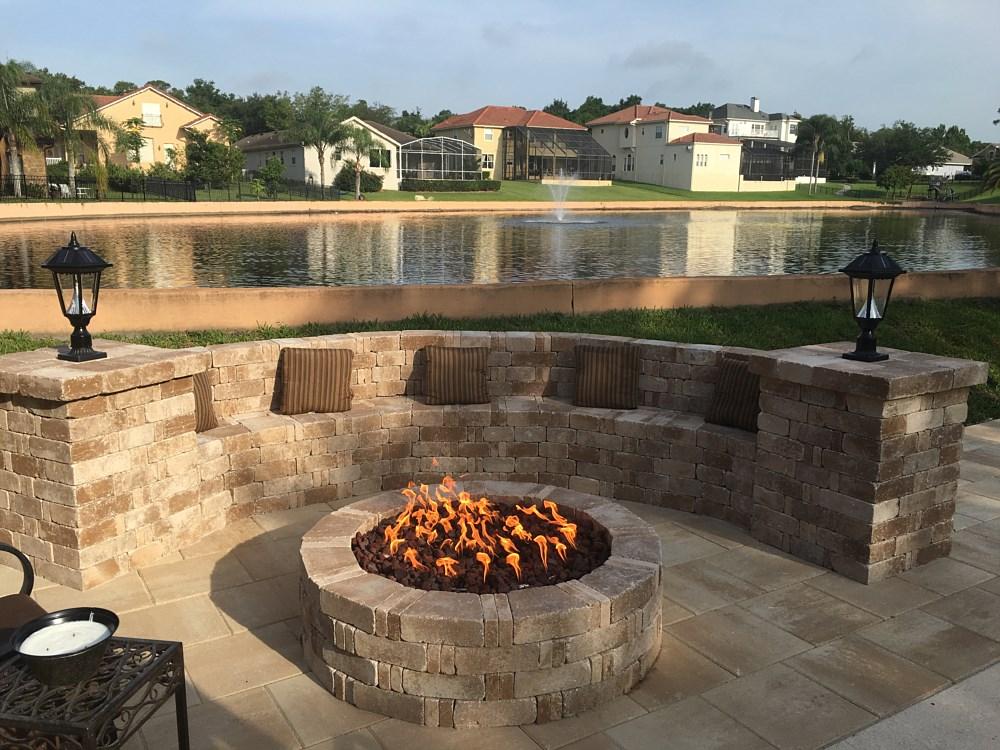
- Lakefront and pond-adjacent properties, where slowing runoff protects the water you live on.
The honest trade-offs
Permeable systems cost more than standard pavers — the deep open-graded base moves a lot of rock. The joint stone needs occasional refreshing, and instead of sealing you will occasionally vacuum or blow debris that could clog joints. Style selection is narrower, though modern permeable lines have gotten genuinely good-looking. For the right lot, none of that outweighs owning a driveway that drains itself.
If part of your property goes underwater every June, bring it up at the estimate. Sometimes the answer is a permeable system; sometimes it is regrading and a standard paver surface pitched correctly. Either way, drainage gets designed before the first stone is set — that is the order the work is supposed to happen in.
Talk to the crew
Free on-site estimate, anywhere in Orange, Seminole, Osceola, Lake, Polk Counties
FL Certified Pool/Spa Contractor · CPC1458737