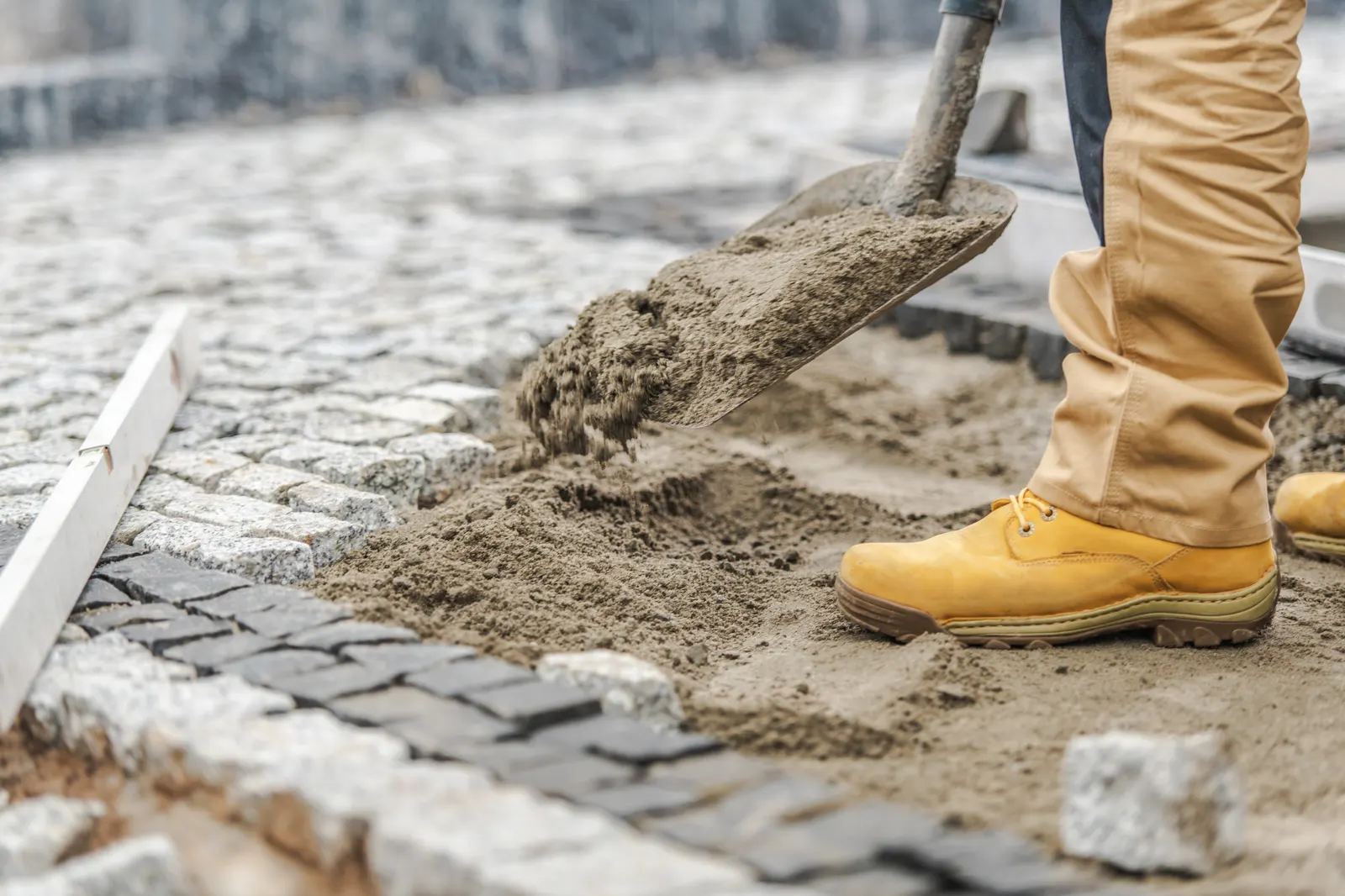
It looks like sand, works like grout, and quietly decides whether your paver joints grow weeds or stay locked for a decade. A working crew explains.
The 33,000 people a month searching for polymeric sand are usually standing over the same problem: joints that wash empty every rainy season, sprout weeds by July, and host ant colonies by August. Regular joint sand does that in Florida. Polymeric sand is the fix — most of the time, applied correctly, with expectations set right. Here is the version we give clients across Central Florida.
What it is
Polymeric sand is graded fine sand blended with polymer binders. Swept into paver joints dry, compacted, and then misted with water, the polymers activate and cure into a firm-but-flexible joint — something between beach sand and mortar. It stays put in a downpour, resists the pressure washer, gives weed seeds almost nothing to root into, and closes the highways ants use to excavate under your patio.
Polymeric vs. regular sand
- Washout: regular sand strips out in heavy rain; cured polymeric holds through Florida summers.
- Weeds and ants: hardened joints deny both. This is the difference homeowners notice most.
- Cost: polymeric costs several times more per bag — and is still a small slice of any project.
- Repairs: polymeric joints must be softened or chiseled to lift a paver; loose sand just sweeps out. A real but acceptable trade.
Why DIY polymeric jobs go wrong
Polymeric sand punishes casual technique. Leave dust on the paver faces before misting and it cures into a stubborn haze you will see for years. Water too hard and the polymers wash out before they bind; too little and the joint stays powder. Apply over damp joints, or ahead of an afternoon storm — which in Orlando means most afternoons June through September — and you get gummy joints that never set. The product is good. The installation window is narrow.
What we recommend
Every surface we install or re-sand gets quality polymeric sand, swept and compacted in stages, blown clean, and misted on a dry-day schedule — then we tell you the truth: expect to top up joints every several years as part of a normal clean-and-seal cycle. If your existing patio joints are empty, weedy, or anty, a professional clean, re-sand, and seal typically resets the clock for years. It is one of the cheapest ways to make an aging paver surface look and behave new.
Talk to the crew
Free on-site estimate, anywhere in Orange, Seminole, Osceola, Lake, Polk Counties
FL Certified Pool/Spa Contractor · CPC1458737